
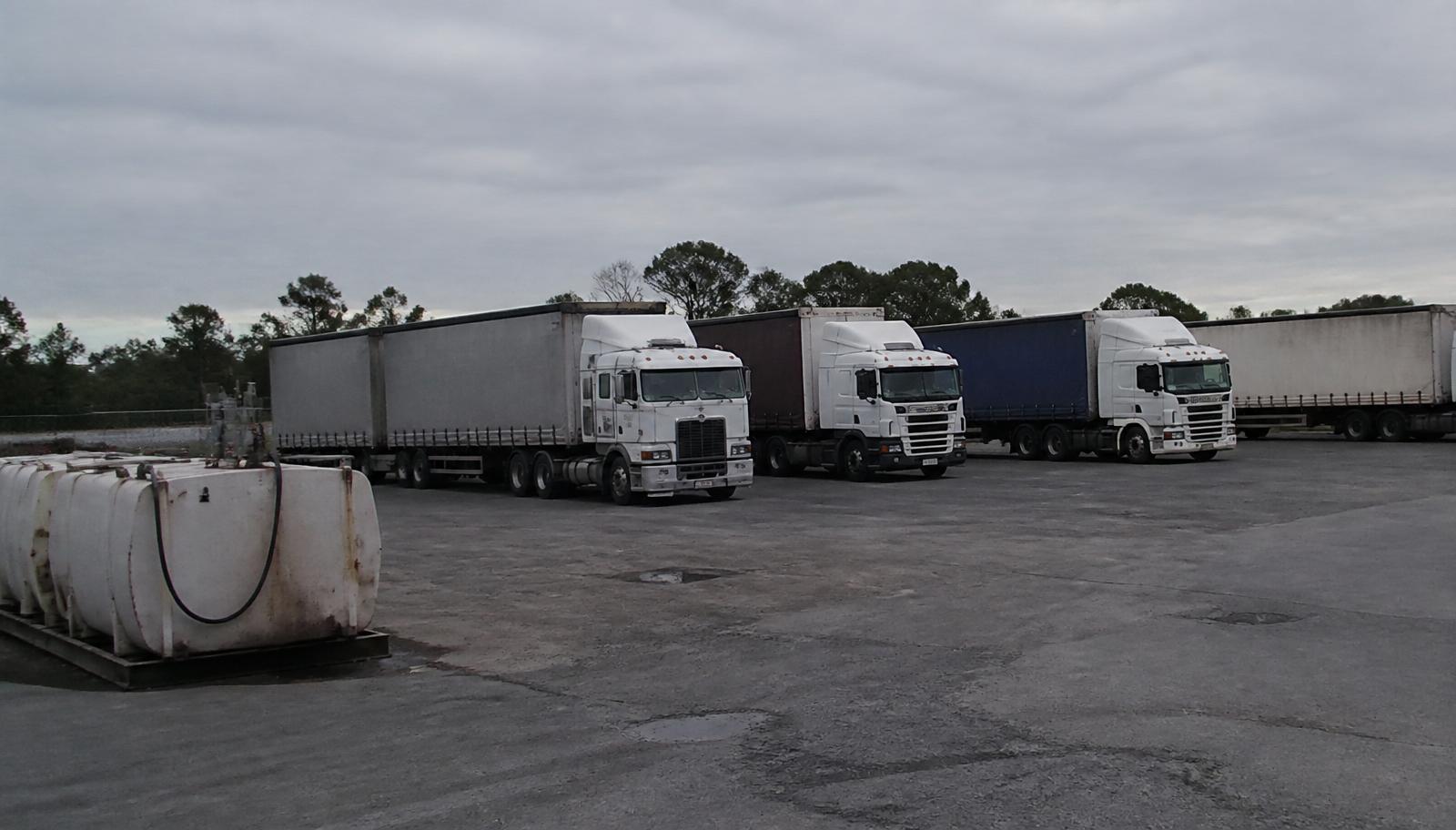
ISO Certification for Transport & Logistics
Satisfy Chain of Responsibility, win freight contracts and clear customer prequal in one hit.
Freight, warehousing and heavy-vehicle operators don't usually chase ISO for its own sake — they chase it because a shipper's tender, a supermarket DC onboarding, an NHVR audit or an insurer's renewal put it on the desk.
We connect Australian transport operators and 3PLs with JAS-ANZ-accredited certification bodies for ISO 45001 (Safety), ISO 9001 (Quality) and ISO 14001 (Environment). The system we help you build has to hold up on a wet Monday morning with three drivers behind schedule — not just at audit.
The most common trigger we see: a shipper (supermarket, manufacturer, mining EPC or freight forwarder) issues a rate review or new-lane tender and lists ISO 45001 plus a documented fatigue and Chain of Responsibility system as a mandatory. The freight is on offer, the deadline is 60–90 days, and the operator's fatigue policy was last updated when the HVNL first changed.
Whether you're a 6-truck line-haul operator picking up a supermarket lane, a refrigerated carrier onboarding to a Woolworths or Coles DC, or a 3PL running pick-pack for an FMCG brand, the mechanics are the same. What differs is who's applying the pressure and which prequal platform they use. Operators feeding into major construction and civil packages should also read our construction and civil & infrastructure pages — the head contractor's prequal usually flows straight down to the cartage subbie. If you're not sure certification is the right call yet, start with the free gap analysis or the Do I need ISO? guide.
Why it matters
Why transport and logistics operators get ISO certified
Transport in Australia sits under the Heavy Vehicle National Law's Chain of Responsibility — every party in the supply chain (consignor, packer, loader, scheduler, driver, operator) carries a legal duty for safety. Shippers know this, and they push the risk down the contract by requiring their carriers to hold third-party-certified safety and quality systems before a load ever moves.
The operators we work with usually arrive with one of four pressures: a tender win they can't sign without ISO 45001, an NHVR intervention or on-road prosecution, an insurance renewal that's suddenly conditional on a management system, or a DC that's changed its carrier onboarding standard mid-year. The free gap analysis is the fastest way to see what will actually fail you at audit.
The underrated benefit is what a real system does to insurance and driver retention. Insurers writing motor and public-liability cover for heavy vehicles increasingly reward a documented fatigue, maintenance and load-restraint regime with premium reductions or better excess terms — and drivers stay longer at operators that run the yard properly. Where the timeline is too tight for full certification before the next tender close or DC onboarding, Spire Safety can deliver an interim third-party-supported system that satisfies most customer and prequal audits while you work toward the certificate.
Chain of Responsibility & HVNL exposure
Under the Heavy Vehicle National Law, every party in the chain carries a primary duty. A documented ISO 45001 system is the cleanest way to demonstrate reasonable steps around fatigue, mass, dimension, load restraint and speed — before an incident, not after one.
Shipper & DC onboarding
Supermarket DCs (Woolworths, Coles, ALDI, Metcash), FMCG brands and freight forwarders now require ISO 45001 or an equivalent third-party-audited safety system before a carrier is added to the approved list.
Prequal platforms — Avetta, Cm3, ISNetworld
Mining, energy, construction and government shippers push carrier onboarding through Avetta, Cm3 and ISNetworld. ISO certificates auto-fill large sections and lift scoring, which decides who gets the tender invite next round.
Insurance & CTP renewals
Motor fleet, public liability and marine cargo insurers increasingly ask for a documented safety and maintenance system at renewal. Certification often unlocks better premiums or excess terms — and prevents a mid-term repricing after a claim.
Dangerous goods, food & cold chain compliance
DG carriers, food and refrigerated operators sit under overlapping regulators (state EPAs, ADG Code, food safety). ISO 9001 and 14001 consolidate the paperwork into one system that the shipper and the regulator both accept.
Which standard matters most
The right ISO standards for transport and logistics operators
ISO 45001
Occupational health and safety. Transport is one of SafeWork Australia's highest-fatality industries — fatigue, load restraint, coupling, forklifts on the dock and reversing incidents. ISO 45001 gives you a defensible system when NHVR, the regulator or an insurer comes knocking.
ISO 9001
Quality management. Covers job scheduling, driver induction, subcontractor approval, POD accuracy, damages and claims handling, and corrective action — the language every 3PL customer audit uses.
ISO 14001
Environmental management. Diesel, AdBlue, tyre disposal, refrigerant handling, wash-bay trade waste and spill response. Increasingly required by supermarket and export-buyer supplier programs.
Sub-sectors we support
Specialists across the transport & logistics supply chain
Line haul & interstate
B-double and road train fleets running interstate lanes for FMCG and general freight.
Metro distribution & last-mile
Rigid and light-commercial fleets doing supermarket, parcel and e-commerce delivery.
Refrigerated / cold chain
Temperature-controlled transport with continuous monitoring for supermarkets and food processors.
Heavy haulage & oversize
Low loaders, escorts, permits — mining, civil and wind-farm plant movement.
Dangerous goods (ADG)
Class 3, 5, 8 fuels, chemicals and gases — ADG Code, DG licensing and placarding.
Tanker & bulk liquid
Fuel, milk, chemical and water carriers with pump-and-hose contact-point risks.
Tipper & bulk solids
Quarry, civil, waste and grain cartage — mass management, load height and site access.
Container & wharf carriers
Sydney, Melbourne, Brisbane and Fremantle port operators — slot-booking and PBLIS compliance.
Freight forwarding & customs
International freight, customs brokerage and consolidator networks — ISO 9001 for shipper due diligence.
3PL warehousing & pick-pack
Multi-client DCs — SKU accuracy, WMS control, allergen segregation and inventory integrity.
Livestock transport
Cattle and sheep carriers — Livestock Production Assurance and effluent management.
Waste & recycling logistics
Skip bins, liquid waste, e-waste — EPA licensing and waste tracking evidence.
Rail freight & intermodal
Rail-linked freight and intermodal terminals — RISSB alignment and interface management.
Bus & coach operators
School, charter and route operators — passenger safety, driver medicals and vehicle maintenance.
Tender & prequal triggers
Where transport and logistics operators are being asked for ISO right now
The schemes and clients putting ISO certification on the table for Australian transport and logistics operators.
Supermarket DC onboarding (Woolworths, Coles, ALDI, Metcash)
Approved carrier lists require ISO 45001 or an equivalent third-party-audited safety system, plus documented fatigue and load-restraint management.
Avetta
Used by mining, energy and manufacturing shippers to onboard carriers. ISO 45001/9001/14001 auto-fill significant sections and lift the scorecard.
Cm3
Common across property, retail and government carrier panels — ISO evidence removes repeat questionnaires and reduces audit exposure.
ISNetworld
Used by BHP, Rio Tinto, Fortescue and major EPCs for haulage and logistics contractors — ISO certificates are treated as baseline evidence against multiple categories.
National Heavy Vehicle Accreditation Scheme (NHVAS)
Mass, Maintenance and Basic Fatigue Management modules — the underlying documented system reuses most of your ISO 45001 evidence.
TruckSafe & Livestock Production Assurance
Industry accreditation schemes that shippers reference alongside ISO for livestock, primary produce and long-haul freight.
How the process works
From gap analysis to certificate
Free gap analysis
we benchmark your current yard, fatigue and maintenance practice against ISO 45001 / 9001 / 14001 in plain English.
Map the management system to how you actually dispatch, load and drive
not theoretical office procedures.
Internal audit & management review
find and close gaps before the external auditor rides along or opens the driver files.
Stage 1 audit (documentation) with a JAS-ANZ-accredited certification body.
Stage 1 audit (documentation) with a JAS-ANZ-accredited certification body.
Stage 2 audit (yard, workshop and driver-facing implementation)
auditor verifies drivers and schedulers actually use the system.
Certificate issued
typically valid 3 years with annual surveillance audits.
Cost & timeline reality check
Certification cost for transport operators depends on standards, driver headcount, number of depots and whether dangerous goods or refrigerated freight is in scope — not turnover. Most operators move through the full path in 3–6 months once the gap analysis is done. See our ISO certification cost guide and certification timeline for the current bands.
Who delivers this
Independent partners behind your transport & logistics certification
ISO Certification Group connects transport and logistics operators with two specialist partners — one builds the system, the other audits it. They operate independently of each other, which is what keeps your certificate credible.
System Development Consultants
Industry-aware consultants who build the management system around how transport and logistics operatorsactually run — gap analysis, documentation, internal audit, and audit-day support.

Nathan Owen
Founder & Consultant

Tanya Protasova
Consultant

Jodie Rice
Consultant

Independent Certification Auditors
JAS-ANZ accredited auditors who issue your certificate of registration. Independent of the consulting team, which is what keeps your certificate credible with procurement and regulators.

Ethan Fricke
Founder & Lead Auditor

Scott Boundy
Lead Auditor

Sam West
Lead Auditor
Alternative pathway
Tender close in 6 weeks and not ISO-ready?
If a shipper or DC has put an onboarding deadline on the table and full certification isn't realistic in the timeframe, Spire Safety can deliver a documented, third-party-supported management system that satisfies most customer and prequal audits at a fraction of the cost — and gives you a clean runway into full ISO certification afterwards.
It's the option we recommend when the freight contract is at risk and the timeline isn't on your side.
FAQs
ISO certification for transport and logistics operators — your questions
Can't find what you're looking for? Our team is ready to help with any questions about ISO certification.
Contact Our TeamAbout the Author
Nathan Owen
Nathan has worked in HSEQ management for 15 years helping Australian businesses improve compliance, manage risk and gain ISO Certification. He has masters degrees in business management and WHS.
More industries
ISO certification for other Australian industries
Ready to clear prequal and win the next tender?
Talk to us about ISO 45001, 9001 and 14001 certification for transport and logistics operators — or run the free gap analysis to see where you stand today.