
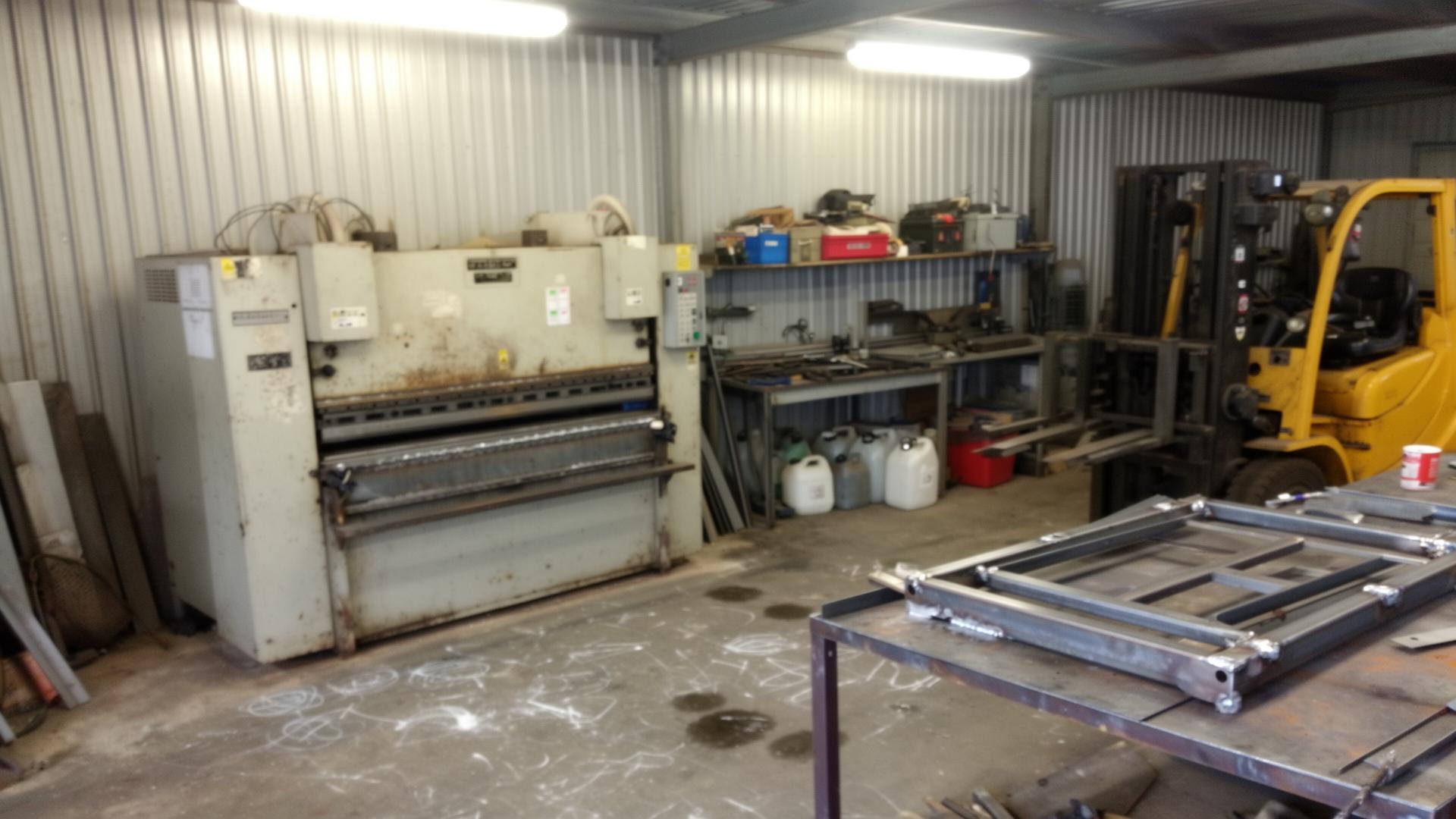
ISO Certification for Manufacturing
Pass customer audits, supply Tier 1 OEMs and prove your process is in control.
Most Australian manufacturers don't pursue ISO because they want it — they pursue it because a customer audit, a supermarket supplier portal, a Defence prime or an export buyer put it on the purchase order.
We connect manufacturers with JAS-ANZ-accredited certification bodies for ISO 9001 (Quality), ISO 45001 (Safety) and ISO 14001 (Environment), and help you build a management system that survives a customer audit without 200 pages of unread procedures.
The pattern we see most often: a Tier 1 OEM, supermarket category manager or export buyer sends through a supplier questionnaire with "ISO 9001 certificate" or "third-party-audited quality system" as a non-negotiable. The contract is on the table, the deadline is 60–90 days, and the existing folder of procedures was written for the last audit and never updated. That's the moment we typically get the call.
Whether you're a 12-person fabrication shop pricing your first defence sub-contract, or a 200-person food processor renewing your Woolworths supply agreement, the certification mechanics are the same. The customer pressure is what differs. If your shop floor feeds into mining EPCs or major civil packages, our mining & resources and civil & infrastructure pages cover the downstream prequal triggers in more detail. Manufacturers whose output gets installed on site by trade crews should also read our construction and electrical & fire services pages — the installer's prequal often dictates which standards the manufacturer needs too.
Why it matters
Why manufacturers get ISO certified
Manufacturing in Australia is uniquely audit-heavy. Customers run their own supplier audits, primes pass down their certification requirements, and major retailers attach quality standards directly to the supply contract. Industry policy incentives, Modern Slavery reporting and Buy Australian preferences all increasingly favour suppliers with a documented, certified management system.
The manufacturers we work with usually arrive with one of four pressures: a lost or at-risk customer audit, a new prime/OEM onboarding, an export market entry, or an insurance/WorkCover review after an incident on the shop floor. The free gap analysis is the fastest way to see which gaps will actually fail you at audit.
The hidden cost most manufacturers don't price in is audit fatigue. A mid-sized supplier to two supermarkets, one defence prime and one mining EPC can sit through 4–6 separate customer audits a year — each one re-asking the same questions about calibration, traceability, supplier approval and corrective action. A well-built ISO 9001 system collapses most of those questions into a single evidence pack the auditor accepts on the spot, and frees the quality manager from being a full-time audit host. Where the timeline is too tight for full certification before the next customer audit, Spire Safety can deliver an interim third-party-supported system that satisfies most customer and prequal audits while you work toward the certificate.
Customer & OEM supplier audits
Primes like Boeing, Thales, BAE, Toyota, Bluescope and Visy require documented quality systems — and most score ISO 9001 as a baseline above which their own supplementary audits begin.
Retailer & supermarket supply agreements
Woolworths, Coles, ALDI and Metcash supplier programs require third-party certification (ISO 9001, plus food-safety standards like HACCP, BRCGS, SQF or FSSC 22000 where applicable) before a product list goes live.
Defence, aerospace & rail supply
DISP membership, AS9100, IATF 16949 and ISO 9001 are routinely cited in primes' subcontract conditions. Without them, you're locked out of the bid before quality even reviews the part.
Export & market access
European, Japanese and US buyers treat ISO 9001/14001 as a screening filter. Certification often unlocks pricing tiers, longer payment terms and reduced incoming-inspection costs for the buyer.
Insurance, WorkCover & post-incident reviews
After a serious shop-floor incident, insurers and the regulator both look for a documented safety system. ISO 45001 is the cleanest way to demonstrate the controls, training, isolations and maintenance regime were in place before the event — not retrofitted after it.
Which standard matters most
The right ISO standards for manufacturers
ISO 45001
Occupational health and safety. Manufacturing sits in SafeWork Australia's highest-claim industries — guards, isolations, forklifts, hot work, hazardous chemicals and machine maintenance. ISO 45001 gives you a defensible system when an inspector or insurer comes through the door.
ISO 9001
Quality management. The standard most customers actually ask for. Covers design control, supplier qualification, traceability, non-conformance, calibration and corrective action — the language of every customer audit.
ISO 14001
Environmental management. Covers trade waste, bunded storage, air & noise emissions, chemical inventories and EPA licensing. Increasingly required by retailers' ESG programs and export buyers.
Sub-sectors we support
Specialists across the manufacturing supply chain
Metal fabrication & welding
Structural, sheetmetal, pressure equipment — strong AS/NZS weld procedure alignment.
Machining & CNC
Precision parts for defence, mining, aerospace and oil & gas supply chains.
Food & beverage processing
ISO 9001 plus HACCP / SQF / BRCGS / FSSC 22000 for retailer supply.
Plastics & polymers
Injection moulding, extrusion, blow moulding — traceability and recycled-content claims.
Chemical & coatings
Dangerous goods, SDS control, manifest quantities and EPA licensing.
Packaging & printing
Food-contact packaging, label accuracy and APCO obligations.
Electronics & assembly
ESD control, RoHS, IPC workmanship and traceability for medical/defence.
Automotive components
IATF 16949-aligned ISO 9001 systems for OEM and aftermarket supply.
Aerospace & defence components
AS9100-aligned ISO 9001, DISP membership and ITAR-adjacent controls.
Machinery & equipment
Capital equipment, conformity assessment and post-sale service controls.
Building products
WaterMark, CodeMark and product certification overlay with ISO 9001.
Contract manufacturing & 3PL packers
Multi-customer audit calendars consolidated into one system.
Tender & prequal triggers
Where manufacturers are being asked for ISO right now
The schemes and clients putting ISO certification on the table for Australian manufacturers.
Defence Industry Security Program (DISP)
ISO 9001 (plus AS9100 for aerospace) is a baseline expectation for Tier 2/3 defence primes' sub-contracts.
Major supermarket supplier programs
Woolworths, Coles, ALDI and Metcash require third-party-certified quality and food safety systems before listing.
Automotive OEM supplier portals
Toyota, Isuzu and aftermarket OEMs reference IATF 16949 / ISO 9001 in PPAP and supplier scorecards.
Mining & resources EPCs
BHP, Rio Tinto, Fortescue and major EPCs pass ISO 9001/45001/14001 down to fabrication, machining and assembly suppliers through ISNetworld and Avetta.
Export buyer due diligence
ISO 9001 and 14001 routinely appear in EU, Japanese and US buyer onboarding — often unlocking better commercial terms.
How the process works
From gap analysis to certificate
Free gap analysis
we benchmark your current shop-floor practice against ISO 9001 / 45001 / 14001 in plain English.
Map the management system to how you actually run
work orders, inspection records, NCRs, supplier approvals — not theoretical procedures.
Internal audit & management review
find and close gaps before the external auditor walks the floor.
Stage 1 audit (documentation) with a JAS-ANZ-accredited certification body.
Stage 1 audit (documentation) with a JAS-ANZ-accredited certification body.
Stage 2 audit (shop-floor implementation)
auditor verifies operators are following the system at the machine.
Certificate issued
typically valid 3 years with annual surveillance audits.
Cost & timeline reality check
Manufacturing certification cost depends on standards, headcount, number of sites and product risk — not turnover. Most manufacturers move through the full path in 3–6 months once the gap analysis is done. See our ISO certification cost guide and certification timeline for the current bands.
Who delivers this
Independent partners behind your manufacturing certification
ISO Certification Group connects manufacturers with two specialist partners — one builds the system, the other audits it. They operate independently of each other, which is what keeps your certificate credible.
System Development Consultants
Industry-aware consultants who build the management system around how manufacturersactually run — gap analysis, documentation, internal audit, and audit-day support.

Nathan Owen
Founder & Consultant

Tanya Protasova
Consultant

Jodie Rice
Consultant

Independent Certification Auditors
JAS-ANZ accredited auditors who issue your certificate of registration. Independent of the consulting team, which is what keeps your certificate credible with procurement and regulators.

Ethan Fricke
Founder & Lead Auditor

Scott Boundy
Lead Auditor

Sam West
Lead Auditor
Alternative pathway
Customer audit next month and not ISO-ready?
If a key customer has put an audit deadline on the table and full certification isn't realistic in the timeframe, Spire Safety can deliver a documented, third-party-supported management system that satisfies most customer and prequal audits at a fraction of the cost — and gives you a clean runway into full ISO certification afterwards.
It's the option we recommend when the contract is at risk and the timeline isn't on your side.
FAQs
ISO certification for manufacturers — your questions
Can't find what you're looking for? Our team is ready to help with any questions about ISO certification.
Contact Our TeamAbout the Author
Nathan Owen
Nathan has worked in HSEQ management for 15 years helping Australian businesses improve compliance, manage risk and gain ISO Certification. He has masters degrees in business management and WHS.
More industries
ISO certification for other Australian industries
Ready to clear prequal and win the next tender?
Talk to us about ISO 45001, 9001 and 14001 certification for manufacturers — or run the free gap analysis to see where you stand today.